
Malaysia is an attractive base for tech entrepreneurs entering Southeast Asia, thanks to its strategic location, digital infrastructure, and multilingual talent pool.
However, working internationally as a foreigner in Malaysia involves more than finding clients. You also need to understand your visa options and how to structure your company.
Should you apply for a digital nomad visa or set up a Malaysian company? And can you start without committing to a permanent office?
To answer these questions, we spoke with Vincent, a Malaysian company secretary who primarily works with foreign entrepreneurs. He shares practical insights on company incorporation, visa considerations, and the steps to set up a business in Malaysia.
Disclaimer: This article is for general informational purposes only and does not constitute legal, immigration or tax advice. Requirements, eligibility criteria, fees and processing times may change. Confirm the latest information with the relevant Malaysian authorities and qualified professionals before making decisions.
Which route should you explore first?
Your options depend on your plans.
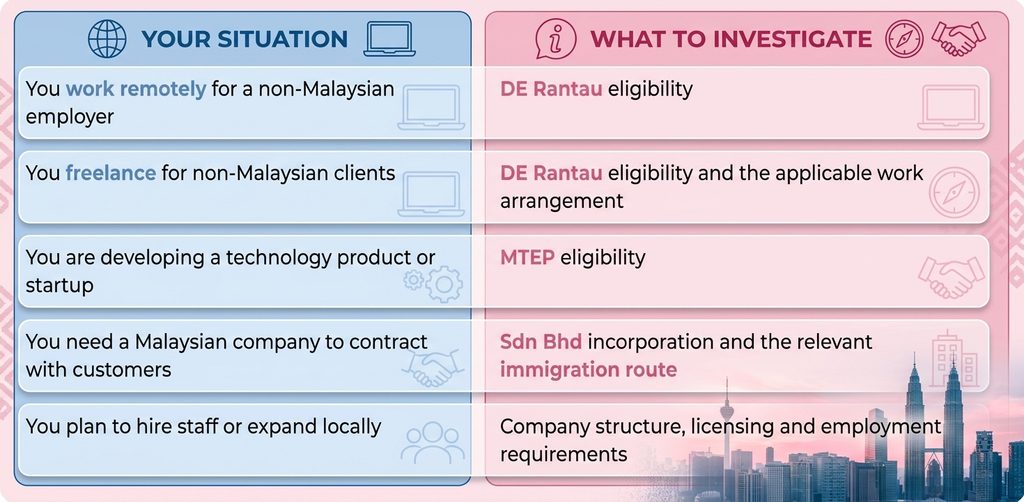
These are starting points for research, not guarantees of eligibility. Seek advice based on your actual business model and circumstances.
Q1. Should I get a digital nomad visa or set up my own company?
Option A: Apply for the DE Rantau Nomad Pass
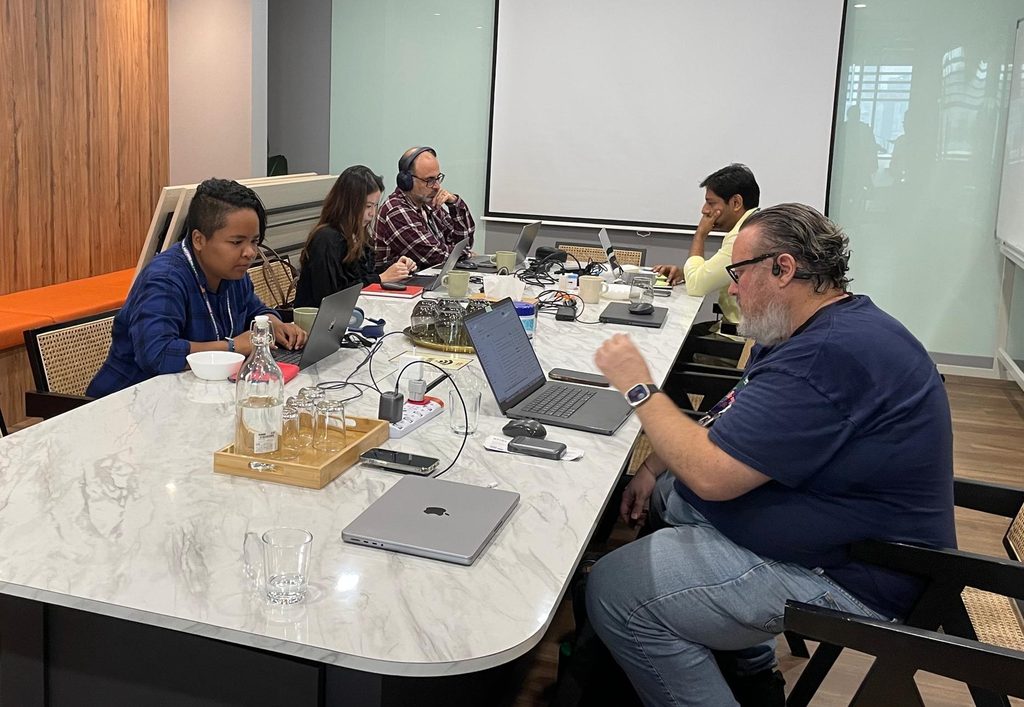
Malaysia’s DE Rantau Nomad Pass is designed for eligible digital professionals who work remotely.
It may suit you if you are a freelancer, independent contractor or remote employee working under an eligible arrangement.
According to Malaysia Digital Economy Corporation (MDEC), the annual income thresholds depend on the applicant’s professional category:
- Digital and technology professionals: More than USD 24,000 per year.
- Other eligible professionals: More than USD 60,000 per year.
Eligible applicants must also provide supporting evidence of their work, such as contracts and employment documents. Freelancers and independent contractors may be able to combine multiple contracts, subject to MDEC’s requirements.
The pass is generally issued for 3 to 12 months and may be renewed, subject to the applicable conditions.
Before applying, check the latest eligibility criteria directly with MDEC.
In addition to the national DE Rantau Nomad Pass managed by MDEC, eligible digital freelancers and remote workers can also apply for the DE Rantau Sarawak Pass, a programme developed by the Sarawak Digital Economy Corporation (SDEC) in collaboration with MDEC and supported by the Sarawak Government. Applications opened in November 2025. Eligibility requirements apply, so check the official programme details before applying.
This blog recounts a Japanese person’s experience obtaining a De Rantau Nomad Pass while working remotely.
However, the DE Rantau Nomad Pass is not a universal visa for anyone who wants to deal with clients/companies in Malaysia. Your occupation, work arrangements and supporting documents matter.
For example, an established software developer working remotely for overseas clients may have a different eligibility profile from a founder who plans to establish and operate a Malaysian technology company.
Option B: Establish a Malaysian Company

If you plan to build a business with a long-term presence in Malaysia, a private limited company, known locally as a Sdn Bhd, may be worth considering.
A Malaysian company can provide a formal structure for activities such as:
- Opening a corporate bank account, subject to the bank’s requirements.
- Hiring employees as the business grows.
- Building a local business presence.
- Managing business income and expenses through a company.
Vincent explains that, as a rough guide, if you expect stable income of RM15,000 or more every month, a Sdn Bhd may be better from a tax perspective. However, some founders may begin exploring incorporation when their income becomes more stable. Others may need a company earlier because of their customers, contracts or business model. The right choice depends on your situation, so it is worth running the numbers with a corporate secretary.
Incorporating a company does not automatically grant its foreign owner the right to live or work in Malaysia.
You must consider the company’s legal and operational requirements separately from your immigration status.
Q2. Can a foreigner register as a sole proprietor?
No, unless you hold Permanent Resident (PR) status. SSM limits sole proprietorships and partnerships to Malaysian citizens and PR holders. Employment Pass, spouse visa, and student visa holders are not considered PR. For most foreigners, the realistic route is to set up a Sdn Bhd (private limited company).
Q3. Do I need a Malaysian partner to set up a Sdn Bhd?
You can generally establish a Malaysian Sdn Bhd with foreign shareholders, and many sectors permit 100% foreign ownership. However, foreign ownership restrictions, licensing conditions and sector-specific rules may apply.
Under Section 196 of the Companies Act 2016, a private company must have at least one director who ordinarily resides in Malaysia, meaning their principal place of residence is here.
Foreign founders either appoint a nominee resident director at first, or appoint themselves once they hold a pass that establishes Malaysian residency.
Q4. Who handles the paperwork, and what kind of documents are required?
Most foreigners do not file anything themselves. A licensed company secretary does the work, and every Sdn Bhd must appoint one.
Prior to incorporation, usually the background info of the Founders (to be Directors or Shareholders/Members) is furnished to a Company Secretary for vetting/KYC purposes. How in-depth it is depends on the firm’s practice. Upon furnishing the information required, an official name search is to be submitted to SSM for approval. Upon name approval, submit the required information for incorporation. A Company Secretary is required to be appointed within 30days from the incorporation date.
The process in short:
- Appoint a company secretary and complete KYC.
- Submit a name search to SSM.
- Your secretary files the incorporation with SSM.
- Open a corporate bank account.
- Complete the follow-up items, such as the first directors’ resolution, any business license, and the founder’s visa.
For details of the procedures and requirements, please refer to SSM Company Incorporation Procedures.
Your secretary will guide you through each step in detail.
Q5. How much does it cost to set up a Sdn Bhd?
The total cost depends on the services you need and the complexity of your business.
For a Sdn Bhd, your initial budget may include:
- SSM incorporation fees.
- Company secretary services.
- Registered office arrangements, if needed.
- Business licences and sector-specific approvals.
- Immigration-related costs, if applicable.
- Office or workspace expenses.
SSM lists the standard incorporation fee for a company limited by shares as RM1,000 for direct incorporation, excluding any additional applicable charges or professional services.
Company secretary fees vary according to the services included. Accounting, tax filing and other compliance costs may also recur throughout the year.
For this reason, request an itemised quotation rather than rely on a single estimated startup cost.
Q6. What Visa Does a Foreign Tech Founder Need?
Company ownership and immigration permission are two different matters.
A foreigner who establishes a Malaysian company must still ensure that their immigration status permits their intended activities in Malaysia.
There is no single visa that automatically suits every foreign founder.
Employment Pass through your own company
Some foreign founders investigate applying for an Employment Pass through their Malaysian company.
This route is subject to the applicable expatriate employment requirements, including company eligibility, position, salary and other conditions.
Do not assume that incorporating a Sdn Bhd is sufficient to obtain an Employment Pass. The company may need to meet additional financial, registration or sector-specific requirements.
Confirm the relevant capital requirements and application conditions with the appropriate authorities or an immigration specialist before you incorporate.
Malaysia Tech Entrepreneur Programme (MTEP)
For eligible technology founders, the Malaysia Tech Entrepreneur Programme is another option worth investigating.
MTEP is administered by MDEC and is designed to attract technology entrepreneurs to establish or grow qualifying technology businesses in Malaysia.
The programme has different pathways for new and established entrepreneurs.
For new entrepreneurs, MDEC currently describes a one-year Professional Visit Pass, which may be renewed subject to the programme’s conditions and the founder’s progress.
The application process can involve:
- A business pitch deck.
- Evidence of financial capacity, including personal bank statements.
- A certificate of good conduct.
- A qualifying local sponsor.
- A letter of offer or tenancy agreement from a recognised Malaysia Digital Hub or other recognised partner, as applicable.
MDEC’s published information lists a minimum personal bank balance of RM50,000 for the new entrepreneur pathway and an application fee starting from RM2,700. These requirements and fees should be checked against the latest application guidance.
Processing times and pass issuance are separate stages. Allow additional time for document preparation and immigration formalities.
An important limitation: MTEP is not intended for every business that uses technology. MDEC identifies non-qualifying activities, including certain consultancy, freelancing, outsourcing and software-integration services. A business that simply provides digital services may not qualify just because it operates online.
Review the programme’s eligibility criteria carefully before treating MTEP as a viable option.
Q7. Do You Need a Physical Office When Starting a Business?
Not always.
In Malaysia, a “Registered Office address” under Sec 46 of the Companies Act 2016 (CA2016) is where the company keeps its statutory books. However, a Business Office address is usually the company’s normal place of business, whether a commercial premises address or a home-based address, depending on the business’s choice and nature.
Before signing a lease, check with your company secretary whether your business activities require a particular type of premises or local council approval.
Start with the workspace you actually need
If you are setting up a business on your own, you may not need to set up a traditional office when you first start out.
You may initially need only:
- A reliable place to work on your product.
- Somewhere suitable for video calls and online meetings.
- A professional environment for meeting collaborators.
- Access to workspaces in different parts of Malaysia.
- Flexibility to travel while continuing to work.
Your requirements may change as your business develops.
Instead of committing to a long-term office lease right away, consider testing different work environments before deciding where you want to establish a regular work routine.
Test Your Working Environment Before Committing to an Office

Starting a company is a major step, but choosing where to work doesn’t have to be.
For a founder who is still exploring the Malaysian market, flexibility can be valuable.
You may not yet know which neighbourhood suits your routine, where your potential customers are, or whether you prefer a coworking space, a quiet cafe, or another working environment.
Remote Work Malaysia offers a flexible way to access workspaces across Malaysia without committing to a conventional office lease.
With the WorkSpace Pass for Business, you can access more than 70 coworking spaces and cafes across Malaysia through a single platform.
This can be useful when you are:
- Building your first startup in Malaysia.
- Working remotely while exploring a new market.
- Travelling between Malaysian cities for business.
- Meeting collaborators or potential customers in different locations.
- Testing where you would prefer to work before committing to a permanent office.
The idea is simple: plan your business first, then choose a workspace arrangement that fits how you actually work.
A flexible workspace pass does not replace a registered office, a business licence or an immigration pass. It is a practical option for accessing workspaces while you build your business.
Learn more here: https://business.remotework.com.my/
Need Help Setting Up Your Company in Malaysia?
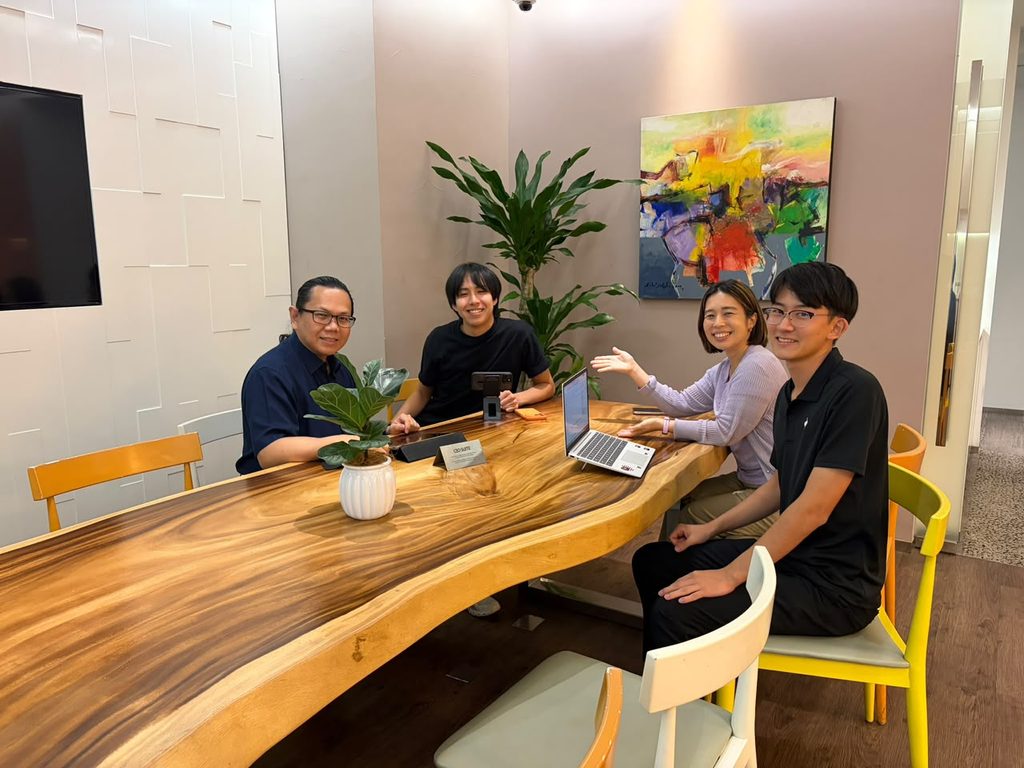
Company incorporation, immigration requirements, and tax planning can be complicated, especially if you are unfamiliar with the local system.
Vincent, a company secretary who works primarily with foreign founders, can help you understand the company setup process and identify the requirements relevant to your proposed business.
If you are considering starting a tech business in Malaysia, speaking with a professional early can help you understand costs, documents, and compliance obligations before you commit.
Contact Vincent to discuss your company setup plans.
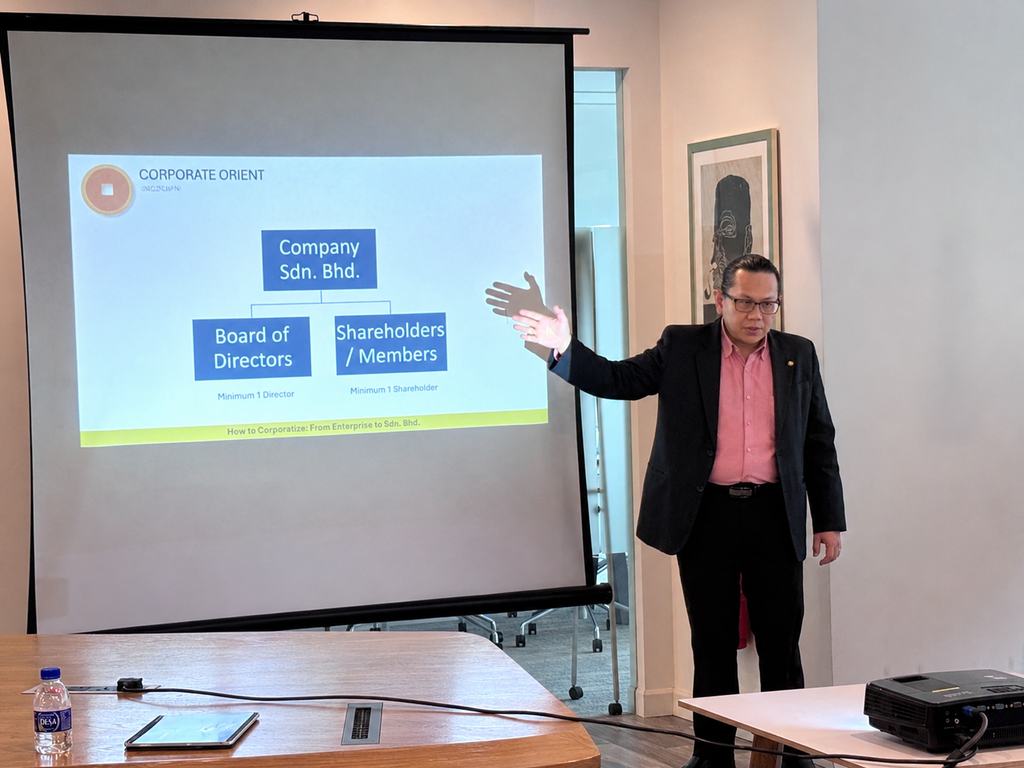
Vincent Hor
Chartered Secretary,
Corporate Orient.
HP: +60123712277
Email: vincent@corporateorient.com
Final Thoughts
Malaysia can be a practical base for entrepreneurs who want to explore opportunities across Southeast Asia. But starting small does not mean skipping the planning.
Before committing to a company, visa or office, take time to understand your business model, legal requirements and expected costs.
Speak with the right professionals about incorporation, immigration and tax matters. At the same time, give yourself the flexibility to test your working environment and learn more about the local market.
With the right preparation, you can make informed decisions about where to establish your business, how to structure it and what kind of workspace will support your next stage of growth.
Disclaimer: This article is for general informational purposes only and does not constitute legal, immigration or tax advice. Requirements, eligibility criteria, fees and processing times may change. Confirm the latest information with the relevant Malaysian authorities and qualified professionals before making decisions.